
800km. 36 days. 32 different beds. 1,143,416 steps. On Monday, 28th October 2024, my husband and I completed the Camino de Santiago.
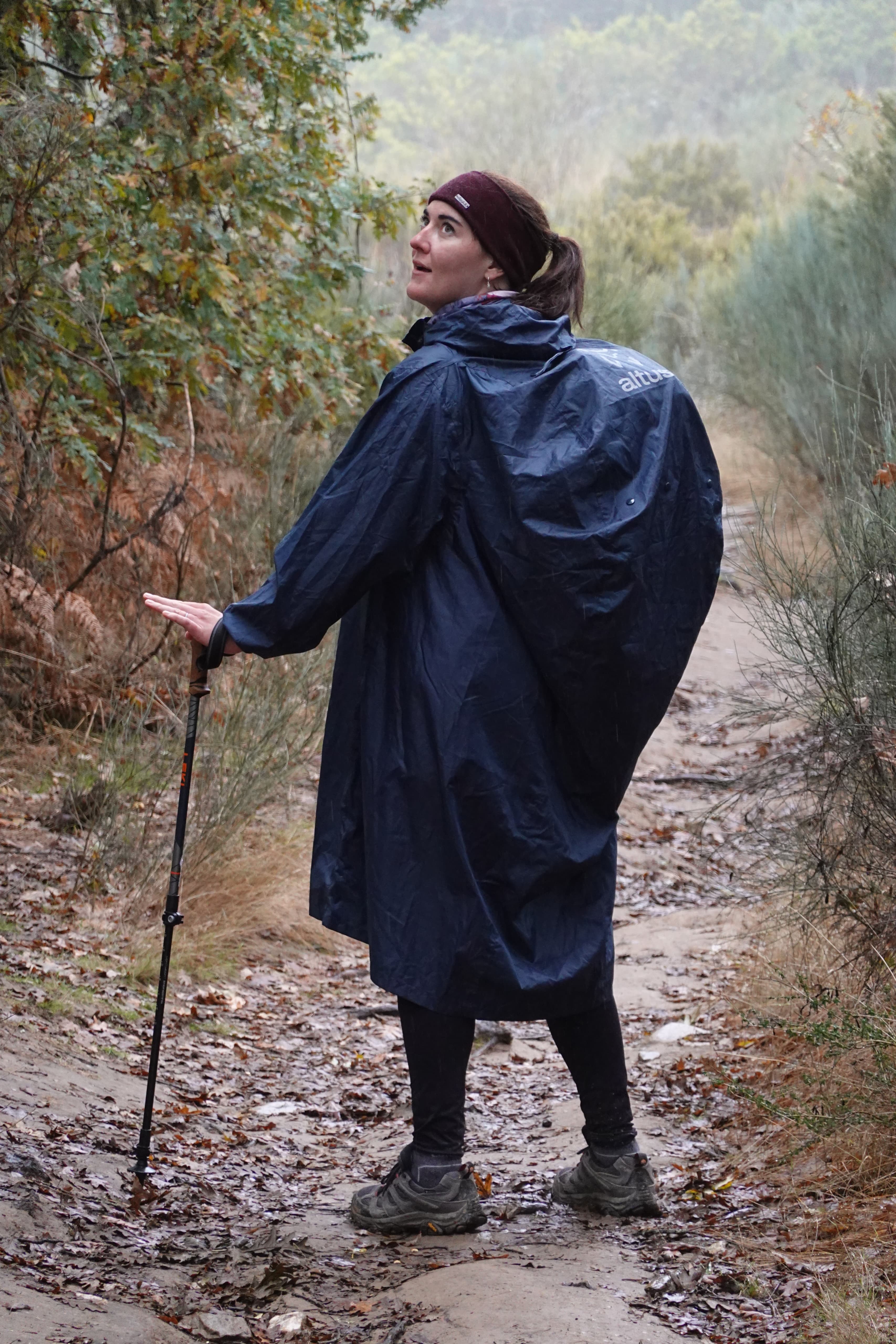
I have needed a few months to process the whole experience. For a while after, it left a sour taste in my mouth. The final 100km, the most commercialised and busiest stretch of the walk, was also the least enjoyable. In this stretch, we had several unpleasant encounters with locals seemingly sick of the sound of walking sticks. Pilgrims stopped smiling at each other. Descending into Santiago de Compostela was not the emotional climax we had hoped for; instead, it felt like a race to nab the limited seats at the cathedral’s historic Pilgrim Mass. They don’t bother to swing the Botafumeiro anymore unless you ‘donate 500 Euros to the cathedral’. And in our final moments on Spanish ground, our airport taxi driver screamed at us. That is not to say we didn’t have great experiences with locals along the Camino. We had many.
However, the sour taste soon cleared. In retrospect, I bloody loved it. The oddity of it all, the people we met, the physical and mental challenges we pushed through, the lessons I have learned, and the sense of achievement now combine in my mind as a life-changing event, a phosphorescent core memory ball from Inside Out glowing all kinds of bonkers colours.
Three questions that various friends and family asked before, during, and after we walked help summarise our whole experience:
Question 1: Why?
As we strapped our 40l backpacks on and set off for Biarritz, our answer to friends and family asking this question was, why not? We are not religious, but a pilgrimage sounded like something unique to do, close to the UK. We only aimed to do some of it before flying back to catch The Rest is History live at the Royal Albert Hall, then starting our ‘real’ travel further afield. After the first day hiking through endless fields of belled horses in the misty Pyrénées, we knew we would have to finish what we started and swiftly donated said tickets.

With our distinct lack of purpose, we listened like flies on the wall as other ‘peregrinos’ revealed their reasons for walking. Some were devoutly religious. Some were trying to reconnect with their lost faith. Some had been through nasty divorces. One had lost someone. “I’m doing it for my health,” a Hungarian sailor called Zoltan said one night before sharing two bottles of wine with us, and a pile of breakfast pastries the following morning. One topless Italian hipster, blaring Eurotrash from a speaker on his hip, seemed to have a different harem of women at his heels each time he passed us. His ‘Camino’ felt cultish. We had much time to speculate on these things.
In a way, our lack of reasoning made us blank pages. We were totally open to self-discovery, and self-discovery we found. As it turns out, walking up to nine hours a day in gently changing environments, ranging from Galician forest to eerie, Windows-XP-desktop desert, unlocks unexpected emotional experiences. The Camino quickly became about the reasons to keep going rather than why we were there.
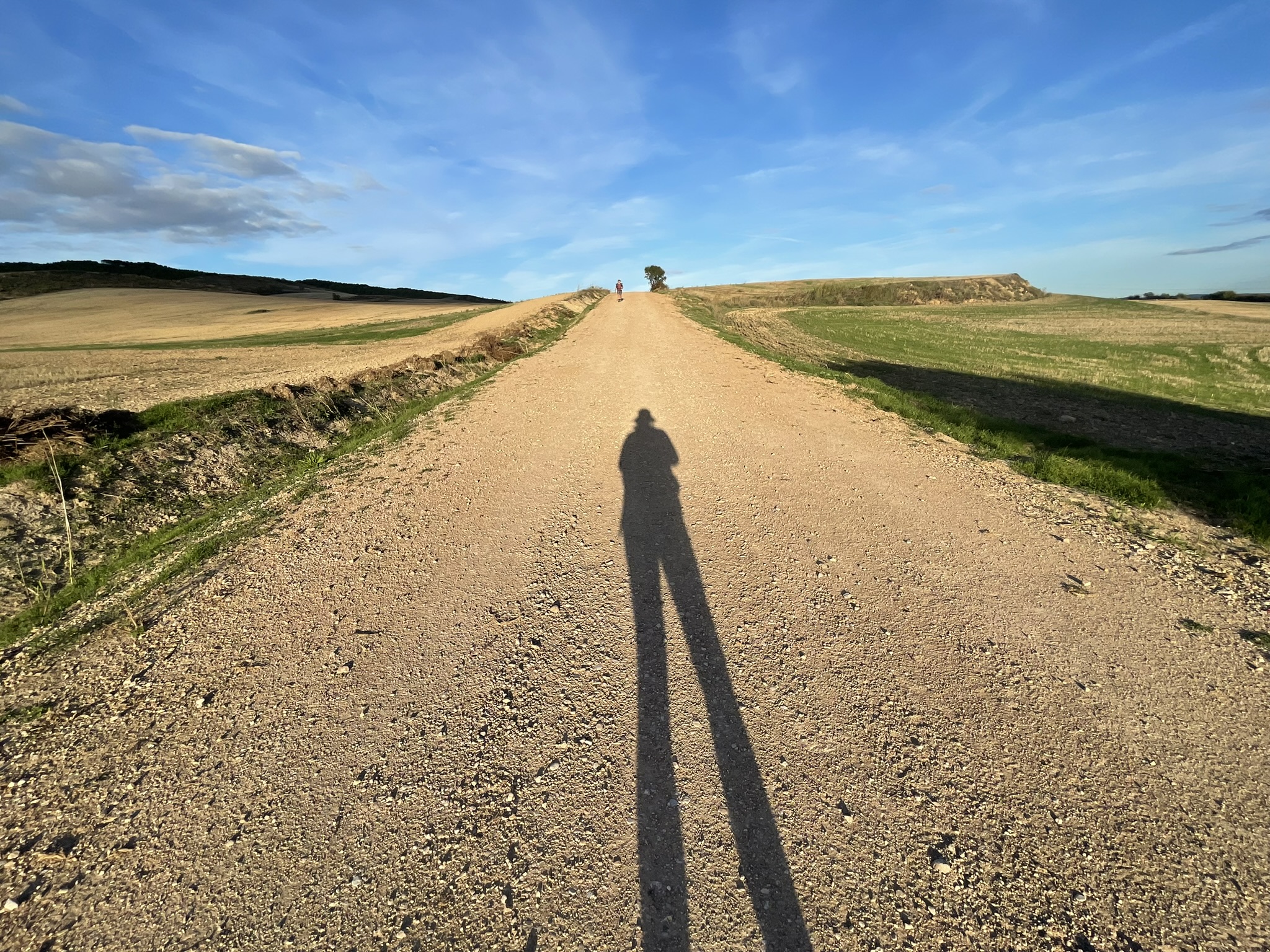
Question 2: Why not just quit?
I had never experienced such pain and frustration as in the first 400km. Despite my body feeling strong and raring to go, I developed blisters on every inch of my feet. I’d whack on a plaster, and a new one would form in a different spot. It was relentless, and it didn’t matter whether I wore my hiking boots, usually cushty Allbirds, or foul new hiking sandals – all of which ended up in the bin. (If you take one thing away from this piece, let it be this: Before attempting to walk across an entire country, for God’s sake and your own, wear in your damn shoes.)
Every tiny stone seemed to pierce through my soles, up into my nerves. It made me think of Hans Christian Andersen’s The Little Mermaid – the grisly original – in which every step with her new legs feels like she’s walking on knives.
I streamed tears and whimpered for much of each walk, often crumpling to the floor to emotionally reset myself. But there was no choice but to move forward, and I frequently found strange things coming out of my mouth as my brain worked to endure the pain. I remember one time I was chanting “Strength. Fortitude.” repeatedly for several hours, like some enlightened Buddhist monk. It felt like self-flagellation – and disturbingly, it helped. On the exceptionally unexceptional and painful walks, dull in surroundings or sharp in rock, I would turn to James and ask, “What the f*ck are we even doing?” to which he’d respond, “The only way out is forward.” My rage knew no bounds.
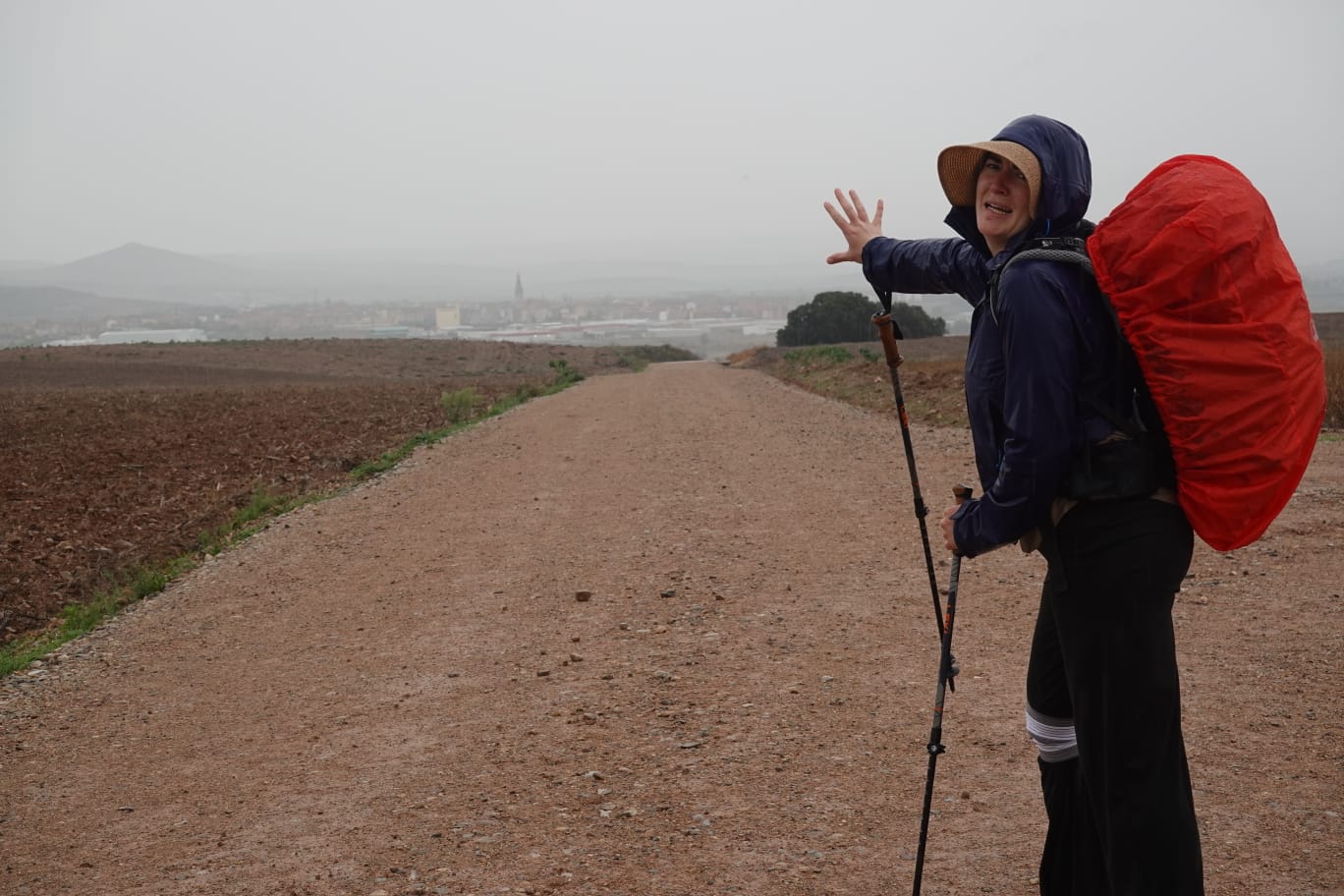
So why didn’t I just stop, as the family members bored to death of my moaning, would ask? At the time, it felt like the most important thing on earth to keep pushing forward despite the pain. It felt like I had a duty to keep going. It felt like no one would ever understand unless they experienced the Camino themselves. I belly-laugh at this now: I had adopted the feeling that I was walking some kind of spiritual path to the Promised Land, whereas I was, in fact, a 3-hour Easyjet flight from home, hobbling along motorways in a stupid hat. That’s the power of Camino culture – it really does get to you.
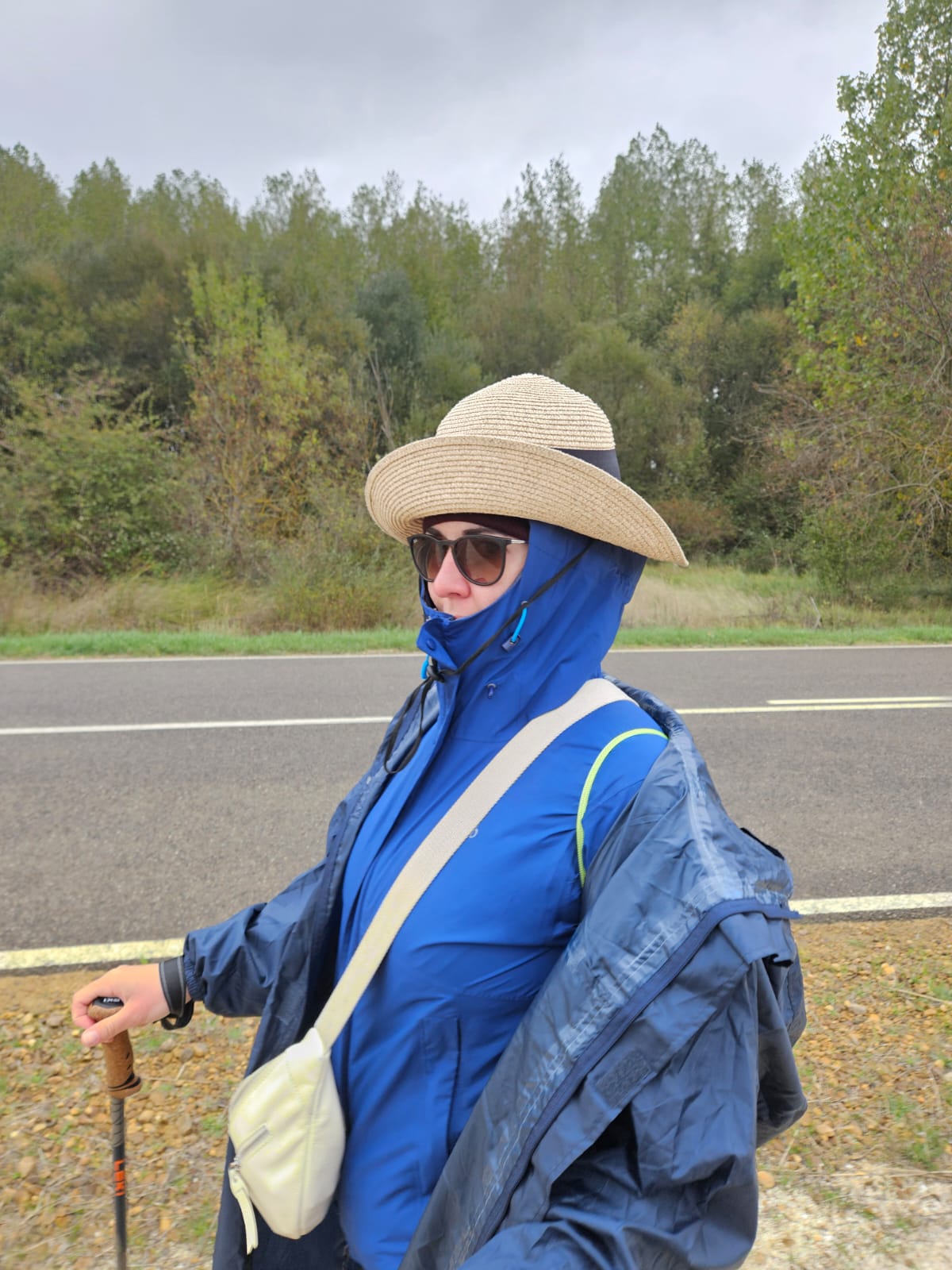
One day, as we approached one of the endless towns in the Meseta, along yet another path next to a motorway, the front of my ankle seemed to explode, and I hopped the final 3km, wailing on one foot. I saw a scissor-happy nurse the following day who lopped off my blisters, screaming at me to grow up as I yelled at him to have a heart. The doctor of this establishment, clearly a few glasses of lunchbreak vino tinto deep, declared my ankle was ‘exhausted’. From then on, I sent my backpack forward using the Camino’s well-oiled baggage service. It took a while to swallow my pride; I had wanted to do the whole thing carrying my bag, or it felt like I would be cheating. But after I realised the important thing was walking the entire thing, bag or not, my Camino transformed from torture to delight. It became especially delightful when I picked up a pair of Merrells walking shoes in Burgos (tip: get two sizes up for long treks).
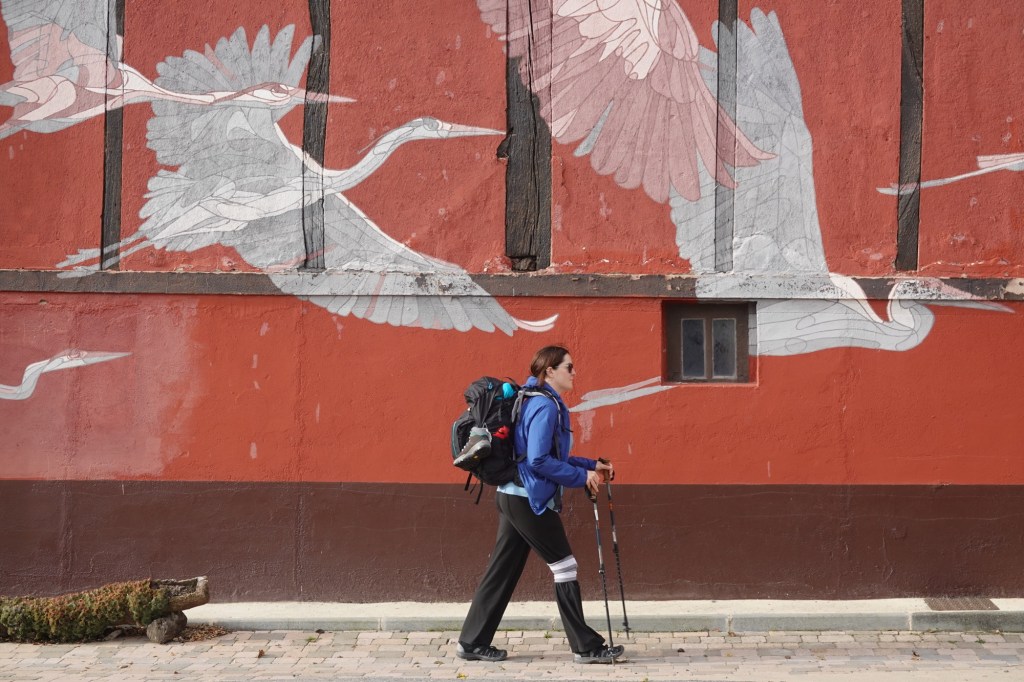
In the second half of my Camino, my spirits were high. I could look around. I no longer needed to listen to music to distract myself from the pain. I would walk for nine hours, lost in my thoughts, genuinely enjoying the walking for the first time. I felt strong, relieved, and proud of pushing through. I am sure James, who had been feeling fine ever since he worked out how to wear his bag correctly, had a sunnier experience after this turning point, too. We even did ‘speed kilometres’ whenever we had a surge of energy and tried to beat our times. Galicia was beautiful. Especially with Estrella Galicia on draught at every stop (and I wondered why I hadn’t lost any weight by the end!)

Question 3: Was it worth it?
After it first ended (and as we landed in spectacular New Zealand, wondering why we hadn’t flown there sooner) I would have said no, the pain I endured on the Camino was certainly not worth the low-resolution Compostela certificate we received in Santiago. But over time the benefits of doing the Camino have become clear.
Surprisingly, I am now a master of packing light and feel a little less materialistic.
It showed me first-hand that humans can endure excruciating pain and keep moving forward. Whenever something challenging happens, physically or emotionally, I’ll remember wailing through all those Castilian forests and making it out in one piece.
It relieved me of all stress. 2024 had been a year of wedding planning and Maid-of-Honouring, on top of some intensive final months at work. Suddenly, we had entered a simple existence, where our only concern was making it from A to B. My stress was replaced with pain, and soon, when that pain melted away, there was just relaxation. Despite the knots in my body, I have never felt more zen than on that plane back home. Of all aspects of the Camino, this A-to-B existence is the only thing with the potential power to lure us back one day.
It made us perceive distance and time in a bizarre new way. 5km is just an hour away. 30km today is easy-peasy after yesterday’s 32km (every tiny kilometre made an enormous difference). That 12-hour playlist you have been building for years on Spotify is pathetically short. Cars are fast and incredible. Without modern transport, people must have just had giant bunions for feet.
We got to visit some beautiful vineyards in La Rioja. Amongst the endless egg tortillas and copy-and-paste pilgrim menus, we managed to track down some magnificent food (shout-out to Restaurante Arrocería Español, the best lunch of the whole trip, as well as Restaurante Cocinandos in León). We made friends while also getting to enjoy each other’s company as relatively new newlyweds. We even slept in a mouldy monastery where everyone was snoring and farting all over each other. It was hilarious.
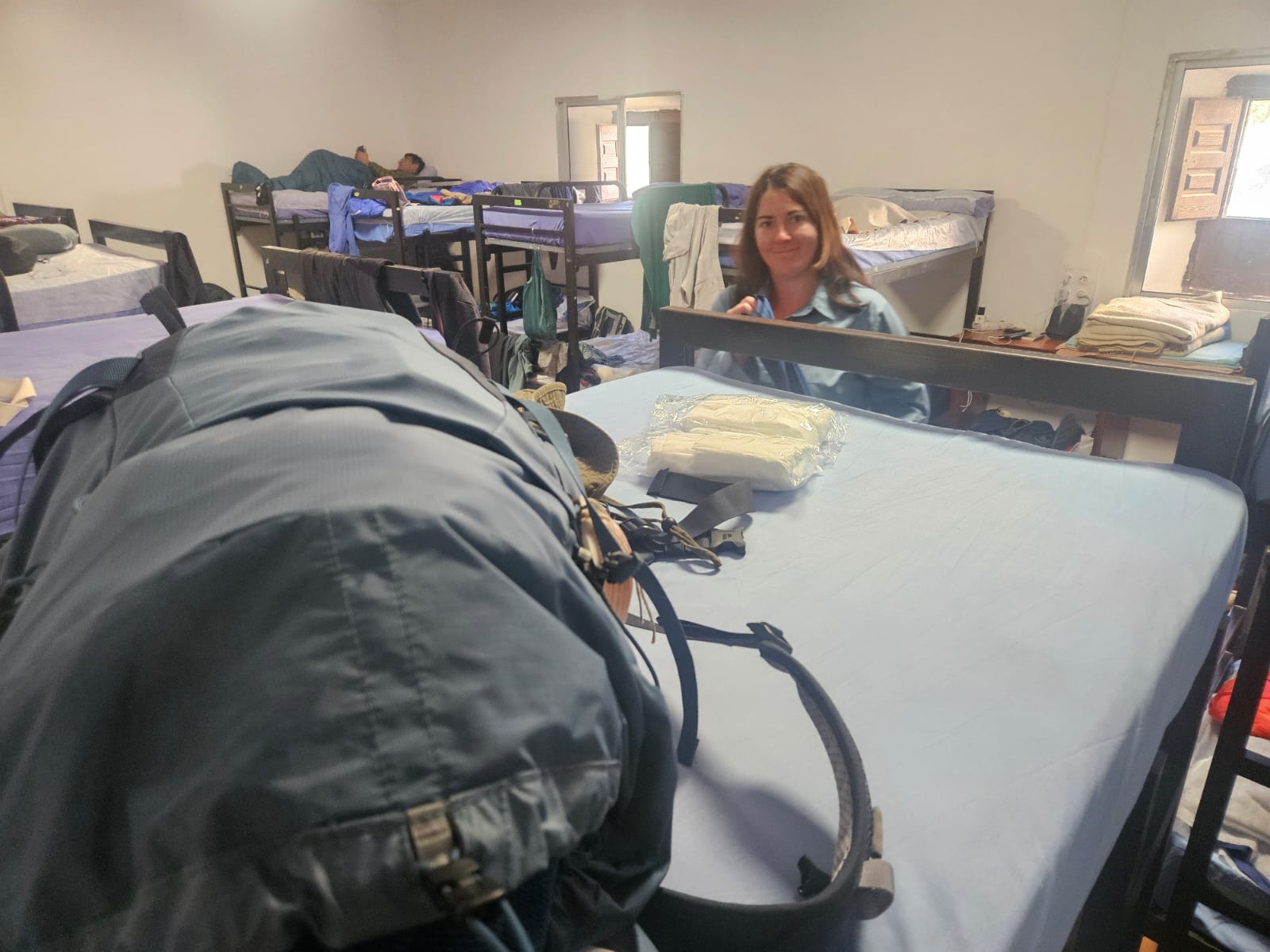
800km. 36 days. 32 different beds. 1,143,416 steps.
Every one worth it.
 Follow Jules
Leave a comment